You keep questioning whether what happened to you was really as bad as it felt to you
Larchmont, NY • In-Person & Online Across NY, NJ & PA
Narcissistic Abuse Recovery Therapy in Westchester, NY
Therapy for the self-doubt, shame, and loss of identity that follow a relationship built on manipulation, with a partner or a parent.

Talia DiPietro, LCSW
What Is Narcissistic Abuse Recovery?
Narcissistic abuse recovery is therapy for what a manipulative relationship leaves behind. The focus is not on diagnosing the other person. It is based on self-doubt, shame, and the loss of your own sense of who you are.
These dynamics run on gaslighting, blame, and pressure to manage another person’s moods. Over time that produces a specific pattern: questioning your own memory, walking on eggshells, cutting yourself off from people, and believing you are the problem.
The work covers grief as well as recovery. There is the loss of the relationship, the loss of the version of yourself who existed inside it, and grief for what you never got to have. All three count.
a personal note
This Is My Trained Specialty
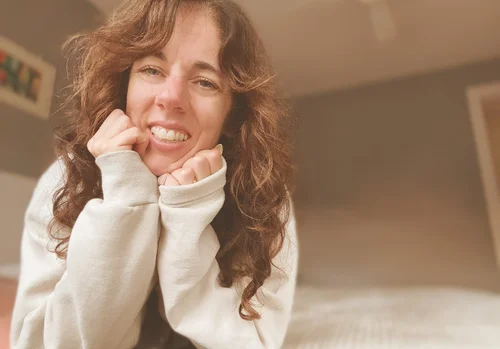
I’m Talia DiPietro, a Licensed Clinical Social Worker in Larchmont, New York. I am trained as a Certified Narcissistic Abuse Treatment Clinician with PESI/Dr. Ramani Durvasula, a leading expert in this field.
People often arrive here after therapy that did not account for the dynamic they were in. When that context is missing, the work can quietly land on you as the problem instead. Naming and understanding this difference is essential to our work together.
what we work on
Do You Question Your Own Memory of What Happened?
- You second-guess your instincts, your memory, and your read on events
- You spent years anticipating and managing another person’s moods
- You are no longer sure what you like, want, or need on your own account
- You feel like a bad person, and you cannot say exactly why
- You are isolated from the people who used to be your main support
- Conflict of any size makes you want to fold almost immediately

how it works
How I Approach This Work
The dynamic gets named. We work with what the relationship was doing to you, in plain terms, rather than treating your reactions as though they came out of nowhere.
Your instincts get rebuilt. Much of the early work is restoring your trust in your own read on a situation, because that is usually what took the heaviest damage of all.
Grief has a place here. Alongside the recovery there is real loss to sit with, including the loss of who you were before it and the future you had assumed you would get.
You do not have to have left. Plenty of my clients are still in contact, still co-parenting, or still deciding what to do. The work does not require a clean break first.
Practical, not only insight. We rehearse the hard conversations, plan ahead for the visits, and build boundaries that you can hold when the pressure is turned up on you.
what we work on
What I Help With
Recovery after a partner. Work on the self-doubt, shame, and hypervigilance that tend to follow a controlling or manipulative relationship.
Recovery after a parent. Support for adults raised by a parent whose needs, moods, and version of events came before everything and everyone else.
Gaslighting and self-trust. Rebuilding confidence in your own memory, instincts, and judgment after years of having all three of them questioned.
Trauma bonds and leaving. Understanding the pull back toward someone who hurt you, without any shame at all about how strong that pull can be.
Boundaries and ongoing contact. Practical work for clients who are still in contact, co-parenting, or seeing the family at the holidays each year.
Rebuilding a sense of self. Finding your own preferences, needs, and identity again after years spent organizing everything around someone else.

is this a fit?
This Therapy Is for You, If:
You want a therapist who understands the dynamic itself and not only the aftermath
You are still in contact with the person and you need help handling it in practice
Getting started is simple
How to Get Started
-
01
Book a Free Consultation
Use the contact form or call 929-400-7783 to set up a free 20-minute phone or video consultation.
-
02
Talk It Through
We go over what brought you here and whether I am the right fit. If so, I send consent forms and we schedule.
-
03
Begin the Work
We map out what is driving the pattern, agree together on where to start, and work at a pace you set.
Common questions
Frequently Asked Questions
What is narcissistic abuse in a relationship?
It describes a pattern of relating that runs on manipulation, blame-shifting, and control of another person’s reality. The term names the dynamic. It is not a diagnosis I can give to someone who is not my client, and none of this work depends on labelling them at all.
How do I recover from a narcissistic relationship?
Recovery generally means rebuilding trust in your own perception, grieving what was lost, and learning to hold boundaries under pressure. The order varies. For many people the self-doubt lifts well before the grief does, and both parts respond to therapy that names the dynamic.
What is a trauma bond, and why is it so hard to leave?
It describes the strong attachment that can form when affection and harm come from the same person on an unpredictable schedule. It explains why leaving is so much harder than it looks from the outside. This is a recognized pattern, not a weakness on your part.
Why do I question my own memory after the relationship?
Because your account of events was contradicted often enough that doubting yourself became a habit. It is one of the most common effects clients describe to me. It tends to improve as you start checking your perceptions against reality in a setting where they are taken seriously.
Can therapy help if I still talk to the person who hurt me?
Yes. Many of my clients are still in contact by choice, by circumstance, or because they share children. We work on what you can control: your boundaries, your expectations going into contact, and your recovery afterward. Leaving is not a prerequisite here.
Do you take insurance, and how do I get started?
I am out of network and do not bill insurance directly, though I provide superbills you can submit for reimbursement. My fee is $275 and I offer 5-session packages based on sliding scale needs. To start, call or use the contact form. I respond within 24 to 48 hours.
Ready when you are
Ready to start narcissistic abuse recovery therapy?
Reach out for a free 20-minute consultation — no pressure, just a conversation.
If you are in crisis or thinking about harming yourself, call or text 988 to reach the Suicide and Crisis Lifeline, or call 911. Therapy is not an emergency service.