A single ambiguous message can take over the whole of the rest of your working day
Larchmont, NY • In-Person & Online Across NY, NJ & PA
Anxious Attachment Therapy for Adults
Therapy for when the fear of abandonment takes over close relationships, and for the older patterns that are running underneath it.

Talia DiPietro, LCSW
What Is Anxious Attachment?
Anxious attachment describes a pattern of heightened alertness to distance in close relationships. It tends to develop when early caregiving was inconsistent, so closeness became something to monitor rather than something to rely on.
Day to day it looks like scanning tone before content, needing reassurance that never quite settles, pushing harder when someone pulls back, and then feeling ashamed of having pushed. The cycle is exhausting. From outside it is close to invisible.
It is a pattern rather than a fixed type, and it is not a personality test result. It can shift. Attachment patterns formed early do change in adulthood, particularly in relationships and in therapy where the response you get is consistent.
a personal note
Knowing Your Attachment Style Isn’t Enough
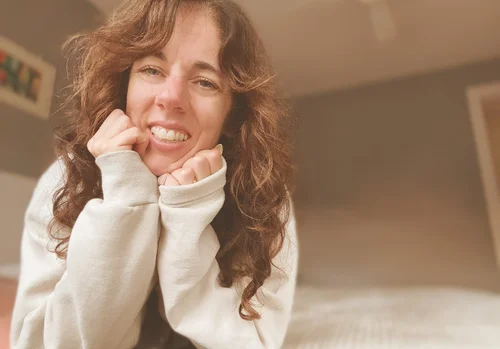
I’m Talia DiPietro, a Licensed Clinical Social Worker in Larchmont, New York, and attachment-oriented and relational work has been the core of my practice for years.
Clients often arrive having read a great deal about attachment styles already. Knowing the label helps. On its own it does very little, and the useful part of this work is what you go on to do with it next.
what we work on
Does One Slow Reply Take Over Your Whole Day?
- A short text sends you hunting for what you must have done wrong
- You need reassurance, and the relief from it never lasts very long
- You read tone for threat well before you read it for its content
- You make yourself smaller so nobody has a reason to want to leave
- Distance makes you push harder, and then feel ashamed of pushing
- You are worn out by relationships that look perfectly fine outside

how it works
How I Approach Anxious Attachment
The pattern is not your personality. We treat this as something learned in a particular environment rather than as a fixed type you were assigned and have to live inside.
We work on the spike itself. You get practical skills for the twenty minutes after an ambiguous message, because that is where most of the damage tends to get done.
Protest behaviour gets decoded. The texting, the testing, the withdrawal: these are attempts to restore contact, and understanding that takes the shame out of examining them.
Self-abandonment gets attention. Shrinking yourself to keep somebody close costs more over time than the distance you were trying to avoid, and we look at that cost directly.
The relationship is practice ground. What comes up between us is working material, because the pattern shows up here too and can be examined live rather than only in retrospect.
what we work on
What I Help With
Fear of being left. Work on the fear that takes over whenever somebody close to you pulls back even a little, for any reason at all.
Reassurance that never settles. Support when the comfort you get helps for about an hour and then the doubt comes straight back again.
Reading tone for threat. Skills for the habit of scanning messages and faces for any small sign that something has gone wrong between you.
People-pleasing in relationships. Work on making yourself smaller and more agreeable so that nobody ever has a reason to leave you.
Panic when someone pulls away. Practical tools for the spike itself, and for the hours afterward when the urge to chase is at its strongest.
Tolerating ordinary distance. Building capacity for the normal gaps in contact that every close relationship involves from time to time.

is this a fit?
This Therapy Is for You, If:
You want to stop making yourself smaller so that somebody else does not leave you
You have read a great deal about attachment styles and now want to do something about it
Getting started is simple
How to Get Started
-
01
Book a Free Consultation
Use the contact form or call 929-400-7783 to set up a free 20-minute phone or video consultation.
-
02
Talk It Through
We go over what brought you here and whether I am the right fit. If so, I send consent forms and we schedule.
-
03
Begin the Work
We map out what is driving the pattern, agree together on where to start, and work at a pace you set.
Common questions
Frequently Asked Questions
What is anxious attachment in relationships?
It is a pattern of heightened sensitivity to distance from people you are close to, usually formed when early caregiving was unpredictable. It shows up as monitoring for signs of withdrawal, needing frequent reassurance, and reacting strongly to ambiguity that others barely register.
Can you change your attachment style as an adult?
Attachment patterns are learned rather than fixed, and they do shift. What moves them is repeated experience of a consistent response, which is why both therapy and more reliable relationships tend to help. Change is gradual, and I cannot put a timeline on it for you.
Why do I panic when someone pulls away from me?
Because distance registers as a genuine threat rather than a neutral event. If closeness was unreliable early on, your system learned to treat any withdrawal as the start of losing the person. The panic is a protective response firing at a situation that does not need it.
What causes anxious attachment to develop?
It is usually associated with inconsistent early caregiving, where attention and comfort arrived unpredictably rather than never. Later relationships can reinforce it. Attachment research describes patterns across groups, so no single account explains any particular person completely.
Is anxious attachment the same as being clingy?
No. The framing is unhelpful. What gets labelled clinginess is usually an attempt to restore contact when a relationship feels genuinely at risk. Understanding what the behaviour is doing is far more useful than a word whose main effect is to make people ashamed.
Do you take insurance, and how do I get started?
I am out of network and do not bill insurance directly, though I provide superbills you can submit for reimbursement. My fee is $275 and I offer 5-session packages based on sliding scale needs. To start, call or use the contact form. I respond within 24 to 48 hours.
Ready when you are
Ready to start anxious attachment therapy?
Reach out for a free 20-minute consultation — no pressure, just a conversation.
If you are in crisis or thinking about harming yourself, call or text 988 to reach the Suicide and Crisis Lifeline, or call 911. Therapy is not an emergency service.