You want to work on the effects without having to recount what happened in full detail
Larchmont, NY • In-Person & Online Across NY, NJ & PA
Therapy for Adult Survivors of Childhood Abuse
Therapy for adults carrying childhood abuse, including the things you have never said out loud and do not intend to describe in full.

Talia DiPietro, LCSW
What Is Therapy for Adult Survivors of Childhood Abuse?
Therapy for adult survivors focuses on what the abuse left behind rather than on the abuse itself. That distinction matters right at the door, because many adults never start at all on the assumption that a full account is the price of entry.
The effects tend to cluster in recognizable ways: difficulty trusting people, shame that has attached to you rather than to the person responsible, dissociation under pressure, and a sense that closeness is a form of exposure.
Family is rarely simple. Some clients are estranged, some are in contact with relatives who deny or minimize what happened, and some are still deciding. All three are workable, and none of them is the wrong answer here.
a personal note
You Do Not Have to Tell Me Everything
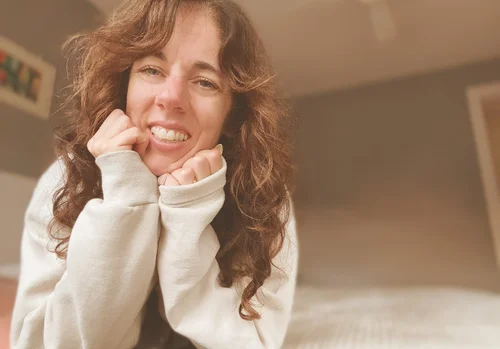
I’m Talia DiPietro, a Licensed Clinical Social Worker in Larchmont, New York, and complex and relational trauma are the core of my practice, which is where childhood abuse sits.
You decide what gets said in this room and what does not. You set the terms. My work is the aftermath, and that is available to both of us whether or not you ever choose to describe the events themselves.
what we work on
Are You Still Carrying Something From Back Then?
- You do not trust people easily, and you have good reason not to do so
- The shame sits on you rather than on the person who caused it
- You go somewhere else in your head whenever things start getting difficult
- Closeness feels like exposure, so you keep it at a safe distance
- Family contact is complicated, or you have cut it off completely
- You cannot remember all of it, and that gap worries you a lot

how it works
How I Approach This Work
Memory gaps are expected. Incomplete recall is a common feature of childhood abuse rather than a disqualification, and the work does not require you to fill in those gaps in order to be effective.
Shame gets relocated. Much of the work is moving responsibility off you and back onto the person it belongs to, which is slower and far more durable than being told it once.
Stabilization comes first. Before anything else you get skills for the moments when you dissociate or go over threshold, so that the rest of the work stays survivable.
Family decisions stay yours. Contact, estrangement, whether to tell relatives: I help you think it through and handle the fallout. I do not tell you which one to choose.
what we work on
What I Help With
Adults abused as children. Work on the effects that outlasted the abuse, at whatever level of detail you decide that you want to go into.
Shame and self-blame. Moving responsibility off you and onto the person it belongs to, which usually takes far longer than one conversation.
Trust and closeness. Support when letting anyone near you registers as exposure, and distance has become the reliable option.
Dissociation under pressure. Understanding why you leave the room in your head, and building skills for staying present when you need to.
Relatives who do not believe you. Help with family who deny, minimize, or take the other side, and with deciding what it is that you owe them.
Memory gaps and self-doubt. Work on the worry that not remembering all of it means you have no right to the effects that you carry.

is this a fit?
This Therapy Is for You, If:
The shame has attached itself to you instead of to the person who was responsible
You are deciding what to do about family who deny or minimize what happened to you
Getting started is simple
How to Get Started
-
01
Book a Free Consultation
Use the contact form or call 929-400-7783 to set up a free 20-minute phone or video consultation.
-
02
Talk It Through
We go over what brought you here and whether I am the right fit. If so, I send consent forms and we schedule.
-
03
Begin the Work
We map out what is driving the pattern, agree together on where to start, and work at a pace you set.
Common questions
Frequently Asked Questions
How does childhood abuse affect adult relationships?
It commonly shows up as difficulty trusting people, discomfort with closeness, and a readiness to expect harm from those nearest to you. Some adults keep everyone at arm’s length. Others move very fast toward intimacy. Both are recognizable responses to the same history.
Do I have to talk about the abuse in therapy?
No. You decide what is described and when, and plenty of useful work happens without a detailed account ever being given. The effects you are living with are available to us either way, and pushing for detail before you are ready tends to set the work back.
What if I do not remember everything that happened?
Incomplete memory is common after childhood abuse and is not a barrier to therapy. Gaps are completely normal and to be expected after experiencing trauma. We work from what you carry now, and chasing missing memories is rarely the useful direction.
How do I deal with family who do not believe me?
There is no single right answer, and the options run from full contact to none. What helps is getting clear on what you want from those relationships, what is realistic, and how to handle the fallout. That decision stays yours and I do not make it for you.
Is it worth starting therapy decades afterward?
Adults begin this work at every age, often after something has made it unavoidable rather than because the timing felt right. What changes over time is usually the reason for starting rather than whether the work is able to help.
Do you take insurance, and how do I get started?
I am out of network and do not bill insurance directly, though I provide superbills you can submit for reimbursement. My fee is $275 and I offer 5-session packages based on sliding scale needs. To start, call or use the contact form. I respond within 24 to 48 hours.
Ready when you are
Ready to start therapy for adult survivors of childhood abuse?
Reach out for a free 20-minute consultation — no pressure, just a conversation.
If you are in crisis or thinking about harming yourself, call or text 988 to reach the Suicide and Crisis Lifeline, or call 911. Therapy is not an emergency service.